Trading weekend quiet for four seasons in Pine sounds dreamy until you hit your first icy morning commute or realize the well and septic were sized for summer. If you love the foothills lifestyle and want to make 80470 your primary address, a little planning goes a long way. In this guide, you’ll learn what to check, what to upgrade, and how daily life really works when your cabin becomes home. Let’s dive in.
Why Pine works year round
Location and lifestyle basics
Pine sits in the Front Range foothills of Jefferson County, with a small historic core and a spread of cabins, custom homes, and acreage properties. Outdoor life anchors daily routines, especially at Pine Valley Ranch Park, which offers trails, Pine Lake, and access in every season. You will find a few beloved local spots for a casual bite and community feel, while bigger errands usually happen along the US‑285 corridor.
For weekly shopping, most residents head to Conifer, where a full‑service Safeway and typical suburban retail await just 10 to 20 minutes from many Pine addresses. It helps to map your route to the Safeway in Conifer and time a couple of supply runs during your normal errand hours.
Services snapshot
Pine has its own post office serving the 80470 ZIP code, while banking, pharmacy, and most professional services cluster in Conifer, Evergreen, and Bailey. Primary care and urgent care are in those towns, and full‑service hospitals are in the Denver and Lakewood area. If year‑round living is your goal, verify the drive time to the services you rely on most and confirm hours that match your schedule.
Daily logistics you should test
Commute reality on US‑285
Most Denver‑area commutes from Pine use US‑285. Driving distance to downtown Denver often falls in the 40 to 50 mile range, with non‑stop drive times around 50 to 70 minutes in good conditions, according to distance estimates between Pine and Denver. Weather, traffic, and traction laws can add significant time on storm days, so test trips during peak hours before you commit.
Limited bus connections serve the Pine Junction area and some commuters use park‑and‑ride lots, but schedules are not a true substitute for a daily personal vehicle. You can review sample schedules and routes via bus options between Pine and Denver, then decide if they fit your routine.
When winter arrives, Colorado traction and chain laws can restrict travel and require approved traction devices during storms. Review the Colorado State Patrol’s traction and chain law guidance and monitor CDOT winter travel advisories whenever snow is in the forecast.
Broadband and cell coverage
Internet and cell coverage vary by address because of terrain, tree cover, and building materials. Many foothills households use fixed‑wireless or satellite, and Starlink is common where cable or fiber is not available. Before you buy or convert, run your address on the FCC National Broadband Map and provider tools, then test indoor cell signal in the exact rooms where you plan to work.
Seasonal living in the foothills
Winter operations
Snow, black ice, and limited visibility are a normal part of foothills life. Plan for extra commute time on storm days, traction devices in your vehicle, and a reliable snow‑plow plan for your driveway. Power outages can occur in wind or heavy snow, so many year‑round residents keep backup heat sources, maintain propane or wood supplies, and consider a portable or whole‑house generator.
Wildfire readiness
Pine lies in Colorado’s wildland‑urban interface. Home hardening and ongoing vegetation management reduce risk and can support insurance and mortgage requirements. Start with ember‑resistant vents, non‑combustible or Class A roofing, and defensible space around the home. The Colorado State Forest Service’s wildfire mitigation guidance outlines specific steps and maintenance intervals.
Converting a cabin: what to upgrade
Water and septic basics
- Well: Order a water quality and yield test and confirm the well permit details and pump setup. Cabins that saw only weekend use may need pump, pressure tank, or treatment upgrades for full‑time demand.
- Septic: Schedule a licensed inspection. Seasonal use can mask undersized tanks or aging leach fields. Be ready to upgrade to meet current county standards.
Insulation, windows, and heat
- Insulation: Improve attic, wall, and rim‑joist insulation to stabilize indoor temperatures and reduce ice dams.
- Windows: Upgrade to modern double‑pane units if the cabin was built for fair‑weather stays.
- Heating: Aim for a code‑compliant primary system with a service plan, such as propane or forced air. Many foothills homes also maintain a secondary heat source, like a high‑efficiency wood stove, for resilience in outages.
Entry and storage layout
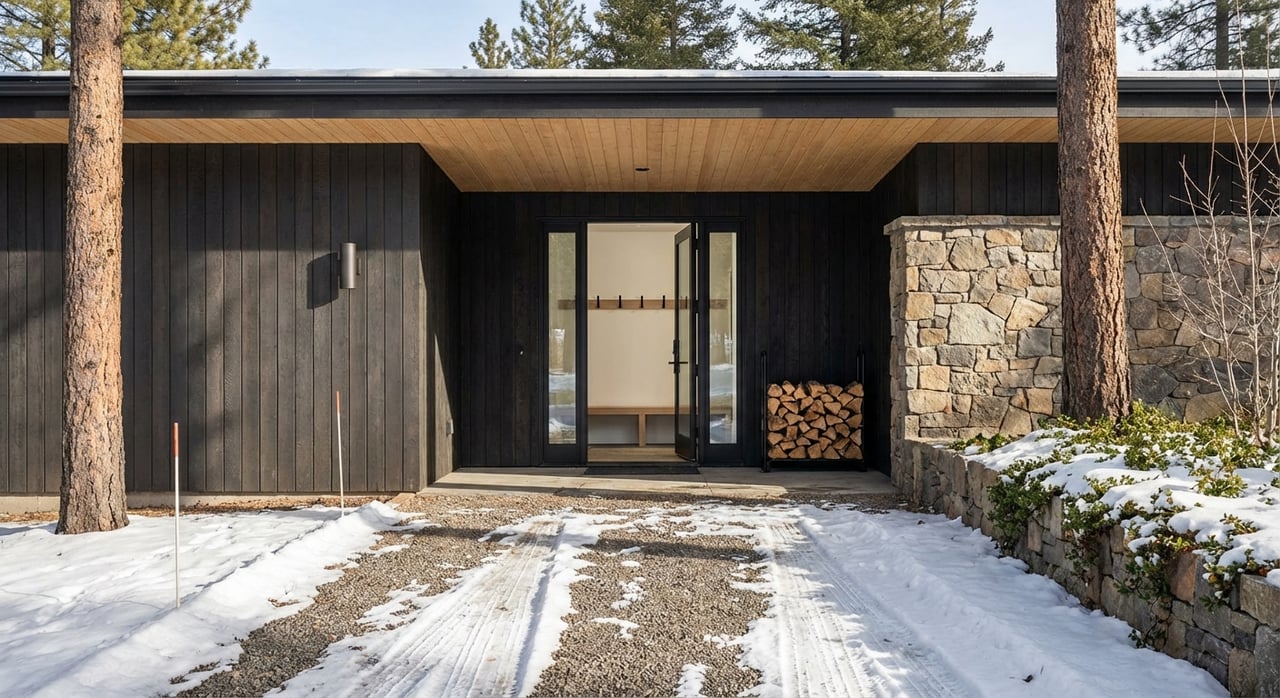
- Add a mudroom or vestibule so snow gear, boots, and wet coats have a landing zone. This protects floors and reduces indoor moisture.
- Expand dry storage for food, pet supplies, and winter gear. Longer shopping runs mean you will appreciate bulk storage options.
Roof and snow management
- Verify roof condition and snow load rating. Consider metal or Class A fire‑resistant roofing for both snow‑shedding and wildfire resilience.
- Add snow guards where needed and keep gutters clear. Safe eavestrough access and roof paths make winter maintenance more manageable.
Access, driveways, and parking
- Grade or widen the driveway for winter reliability and emergency vehicle access.
- Create a turnaround if one does not exist. Confirm whether the county or an HOA handles road plowing and line up a private plow service if needed.
Work‑from‑home setup
- Confirm ISP options at the exact address and plan for a backup connection if your work is mission‑critical. Fixed‑wireless or Starlink are common solutions.
- Test indoor cell coverage and consider a booster for home offices tucked into lower levels or areas with tree cover.
Firewise landscaping
- Implement home‑ignition zone best practices. Clear debris from roofs and decks, trim ladder fuels, and maintain spacing between vegetation and structures.
- Schedule a recurring spring and late‑summer check. Wildfire mitigation is a multi‑year habit, not a one‑time project.
What full‑time life looks like
Schools and schedules
Pine addresses are served by Jeffco Public Schools in the Conifer articulation area. Local neighborhood schools include Elk Creek Elementary, West Jefferson Middle, and Conifer High School. Families should verify bell schedules, bus routes, and inclement‑weather policies directly with the district; the Elk Creek Elementary contact page is a good starting point.
Medical and emergency planning
Primary care, urgent care, and small clinics are available in Conifer and Evergreen. Full‑service hospitals are in the Denver and Lakewood area, typically 30 to 75 minutes away depending on destination and conditions. Ask sellers or neighbors about typical ambulance response, confirm your property’s designated fire and EMS providers, and make sure your driveway allows safe access.
Groceries and errands
Plan on weekly shopping runs to Conifer and occasional trips to Evergreen or the Denver metro for specialty items and services. In Pine itself, you will find a handful of locally loved businesses that provide community and convenience on quiet evenings and weekends. The rhythm is slower than the suburbs, which is part of the appeal, and it rewards a thoughtful routine.
A smart, address‑level checklist
- Confirm utilities for your address: electric company, propane vendor, trash service, well and septic records. Do not rely on ad copy; make phone calls.
- Test the drive to work and school on weekday mornings and evenings, plus at least once during winter weather. Check COtrip and CDOT for real‑time updates.
- Verify broadband and cell coverage at the exact home location using the FCC Broadband Map and provider tools. Bring your laptop and test speed indoors.
- Order a well test, septic inspection, and a roof and structure review that considers snow load and wildfire exposure.
- Ask Jeffco Public Schools for current attendance boundaries, bus options, and weather policies.
- Get quotes for winter readiness: driveway plowing, traction devices if you drive 285 during storm periods, and home‑hardening work such as roof upgrades or defensible space.
Work with a local pro
Turning a beloved cabin into a reliable full‑time home blends lifestyle, engineering, and logistics. You deserve a guide who understands wells, septic, access, wildfire risk, and the day‑to‑day realities along US‑285. If you are weighing a move in Pine or nearby Conifer and Evergreen, let’s talk about your address, your goals, and a practical plan to get you there.
Ready to map your next steps? Schedule a Foothills Consultation with Julia Purrington‑Paluck.
FAQs
What should I inspect before converting a Pine cabin to a primary home?
- Order a well yield and water quality test, a licensed septic inspection, and a roof and structure review for snow and wildfire exposure. Verify driveway access for winter and emergency vehicles, and confirm utility providers and broadband options at the exact address.
How long is the commute from Pine to Denver on a typical day?
- In good conditions, many drives to downtown Denver run about 50 to 70 minutes, with total driving distance often 40 to 50 miles. Storms, traffic, and traction laws can add significant time, so test trips during peak hours in different conditions.
What internet options support remote work in Pine?
- Options vary by address and may include fixed‑wireless, satellite, or Starlink where cable or fiber is not present. Always run your exact address on provider tools and test indoor speeds and cell coverage before you commit.
Which schools serve Pine addresses for K‑12?
- Pine is in the Jeffco Public Schools Conifer area. Neighborhood schools include Elk Creek Elementary, West Jefferson Middle, and Conifer High School. Verify current boundaries, bus routes, and bell schedules with the district.
How should I prepare my driveway for winter in Pine?
- Grade and widen where needed, add an emergency turnaround, set up a plow contract, store traction materials, and keep a shovel and roof rake handy. Mark driveway edges and culverts before the first snowfall to help plow crews and delivery drivers.