Colorado Foothills Market Update: Outlook For The Spring Housing Market
Market Update: February 2026
Evergreen • Conifer • Clear Creek County • Park County
If there is one factor that will determine how the foothills housing market performs in 2026, it’s mortgage interest rates. Over the past few years, rates have acted as the primary throttle on buyer activity. When rates briefly dropped below 6% earlier this year, activity across the foothills increased almost immediately. Showings rose, more homes came to market, and contracts began picking up again.
But the outlook for rates remains uncertain. Inflation pressures tied to energy prices and broader global instability could keep borrowing costs volatile. If rates stabilize near current levels, the foothills market could see a healthy spring. If they move higher again, buyer momentum may stall.
The February data reflects this tension clearly: the market feels busy, but transactions still require more negotiation to reach closing.
Across the foothills, listings are attracting showings and buyers are writing offers. At the same time, deals are taking longer to finalize than they did during the peak years of the pandemic housing boom. Buyers are more deliberate, inspections play a larger role in negotiations, and pricing expectations between buyers and sellers sometimes take longer to align.
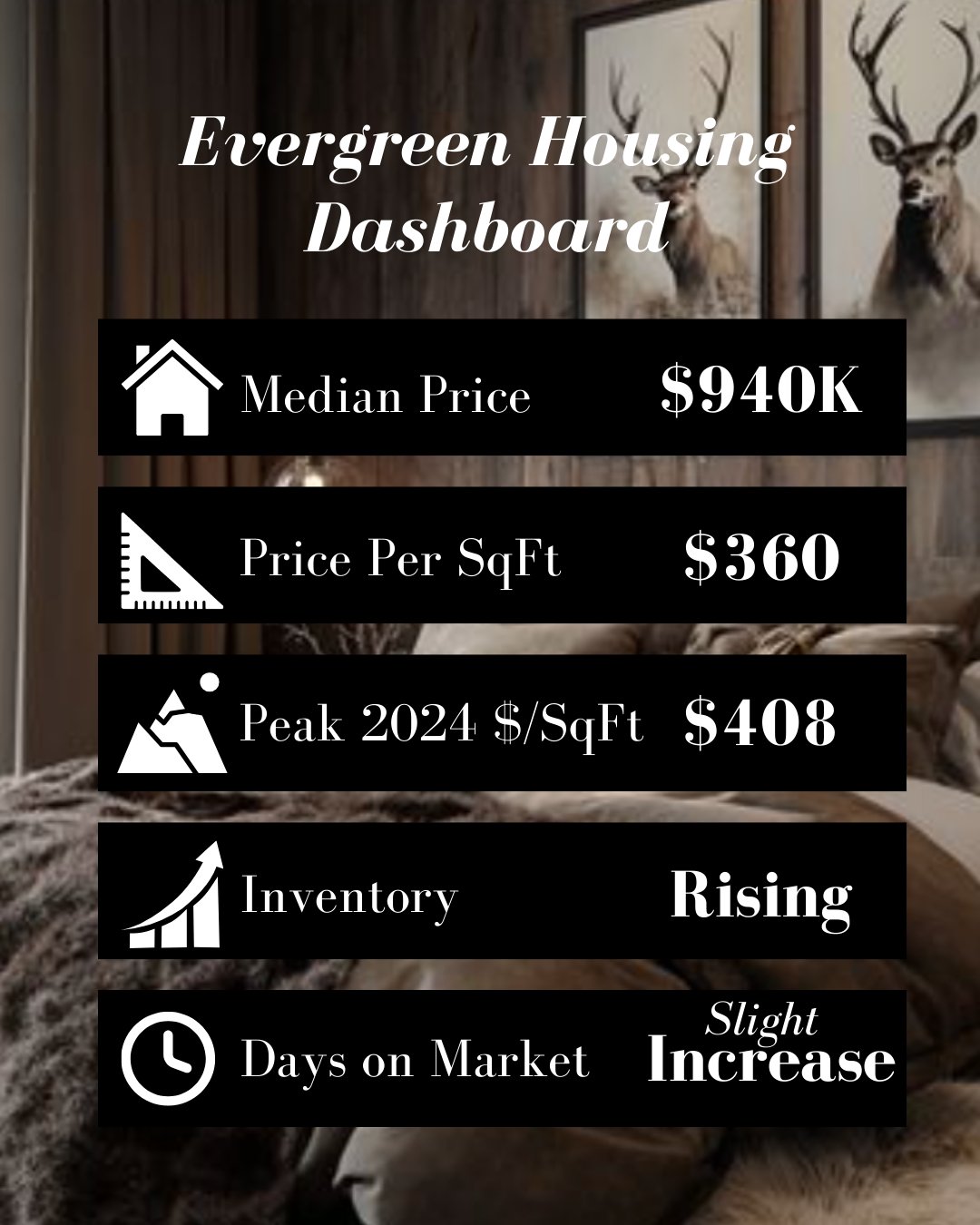
Evergreen Market Dashboard
Evergreen provides a clear snapshot of current foothills trends. Detached homes currently show a median price near $940,000, with average pricing just above $1 million.
Price per square foot currently sits near $360, roughly 10 percent below the peak reached in 2024 but still well above pre-pandemic levels.
This suggests the market is normalizing rather than declining.
Inventory across the foothills has also begun to expand modestly as more sellers test the market ahead of the spring season. Buyers now have more options than during the extremely tight inventory conditions of recent years, which has shifted some negotiating leverage back toward purchasers.
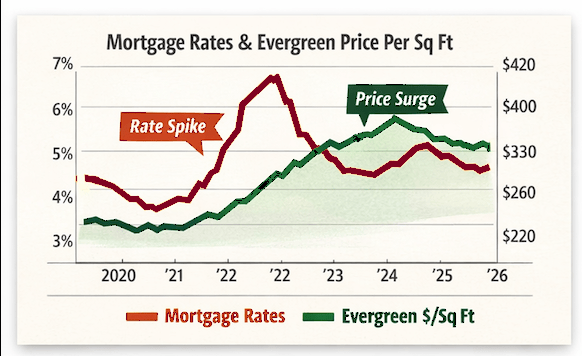
Mortgage Rates vs Evergreen Home Prices
Over the past several years, the relationship between mortgage rates and foothills home prices has become increasingly clear. Periods of rising rates have slowed both transaction activity and price growth, while periods of stability have supported stronger demand.
Interest rates remain the single biggest variable shaping the housing market today.
Even small changes in borrowing costs can significantly affect affordability in foothills markets where many homes are priced near or above $1 million.
As the spring market approaches, the direction of mortgage interest rates will likely determine whether the recent increase in activity translates into stronger sales. If rates remain near current levels, the foothills market could see a solid spring season. If borrowing costs rise again, the market may continue moving forward—but at a slower and more negotiation-driven pace.
For now, the foothills market appears active, stable, and gradually adjusting after several years of extraordinary conditions.
As always, if you’re curious how these trends affect your home or your plans in the foothills, I’m always happy to be a resource and talk through what the market means for you. 'Till next month!
Julia