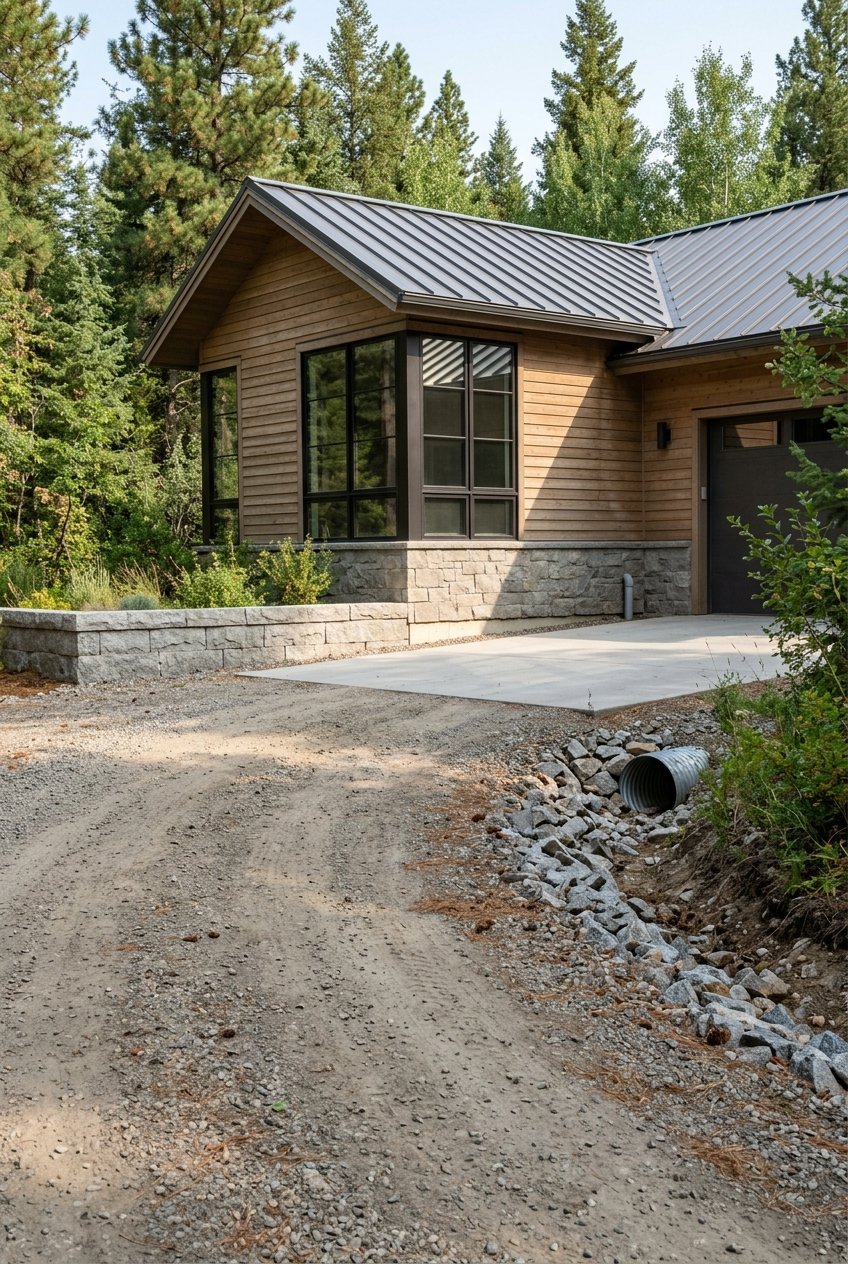
Buying acreage in Conifer can feel exciting right up until the practical questions start piling up. Is the road publicly maintained, or will you share upkeep with neighbors? Can the parcel support a well and septic system? What does the slope, drainage, or wildfire exposure mean for your plans? If you are looking at land in the foothills, those questions matter just as much as the view. This guide walks you through the most important parcel-level issues to review before you buy so you can move forward with more clarity and confidence. Let’s dive in.
Why Conifer acreage needs extra due diligence
In Conifer, acreage purchases are rarely simple plug-and-play transactions. The foothills setting brings a different set of considerations than a typical in-town lot, especially when you are evaluating access, utilities, drainage, slope, and permit feasibility.
Jefferson County treats grading, drainage, subsurface groundwater, water supply, and wastewater as separate review topics. That matters because a parcel that looks promising at first glance may still require more investigation before you know what is practical, buildable, or cost-effective.
Wildfire is another major factor. Jefferson County says more than two-thirds of the county falls within a designated Wildfire Hazard Overlay District, and the county’s Wildfire Commission identifies Evergreen and Conifer among the highest-risk areas in the county. In other words, acreage here should always be reviewed carefully and specifically, not by assumption.
Access and roads in Conifer
Do not assume road maintenance
One of the first questions to ask is simple: Who maintains the road? In unincorporated Jefferson County, some roads are county-maintained, while others are privately maintained or handled through another arrangement.
Jefferson County Road & Bridge maintains more than 3,005 lane miles of paved road and 651 lane miles of gravel road in unincorporated areas, and District IV serves Conifer, Pine, and Buffalo Creek. Even so, the county makes clear that maintenance status should never be assumed just from a property address.
County acceptance has strict standards
If a road is not currently county-maintained, do not assume the county will take it over later. Jefferson County says a road must be deeded and dedicated to the county and built to current county standards before it can be accepted for county maintenance.
Those standards include a 24-foot paved surface, three-foot shoulders on each side, and proper drainage structures such as culverts. For buyers, that means a private road may stay private unless it already meets those requirements.
Driveways, easements, and right-of-way matter
Access gets more detailed once you move beyond the road itself. Jefferson County requires an access permit only for driveways and private easements or roads that connect directly to a county-maintained road.
That permit covers only the access cut and the first 15 feet of driveway on residential roads, or the first 25 feet on arterial roads. The county also says it has no official right-of-way maps, so if you are planning fences, landscaping, or other improvements, it is smart to verify the right-of-way line with a licensed surveyor and, when needed, a title search.
Utilities on acreage parcels
Well water needs verification
In some parts of Jefferson County, homes rely on private wells. Colorado says private wells are not regulated under the Safe Drinking Water Act, which means the well user is responsible for testing and maintaining drinking water quality.
The state also requires a well permit for every new well in Colorado that diverts groundwater. If a parcel already has a well, a permit-file review through the state’s well-permitting tools can help you verify allowable uses and check any available construction or pump records instead of relying only on a seller summary.
Jefferson County Public Health also recommends testing well water for certain contaminants. Its current guidance notes that the state lab has suspended water testing, so buyers may need to work with a private certified lab.
Septic feasibility is site-specific
For many Conifer acreage properties, onsite wastewater treatment systems, or OWTS, are part of the picture. Septic feasibility depends on soil conditions and the depth to a water table or restrictive layer, according to Jefferson County Public Health.
That is why a parcel-level review matters so much. A designer may need to identify test-hole locations that meet setbacks and other requirements, and the county’s permit application requires an engineering design document, soil tests, a site plan, and sometimes a geological report.
Jefferson County also says the property must have a legal address before it will accept an OWTS permit application. In some cases, bacteria and nitrate well-test results are also required before permit approval is issued.
Use local professionals for septic review
With septic, local experience counts. Jefferson County’s forms and process point buyers toward professionals such as designers, engineers, and installers who understand county requirements.
For an existing system, the county notes that some suitability reviews may be supported by a professional engineer inspection report. If you are buying acreage with a home already on it, this kind of review can help you understand whether the current system appears suitable for continued use.
Confirm power and internet by parcel
Utility coverage in the foothills is rarely something to guess about. Xcel’s Colorado communities-served guide lists Conifer as gas only and also notes that Xcel does not serve every community in full, so service should be confirmed at the parcel level.
Internet needs the same parcel-specific approach. The Colorado Broadband Office’s Broadband Mapping Hub and the FCC National Broadband Map both allow address-level searches, and the FCC map can show fixed technologies such as fiber, cable, DSL, satellite, and fixed wireless. Still, it is a service-availability tool, not a performance guarantee.
Topography, geology, and site layout
Slope and subsurface issues can affect plans
Conifer acreage often comes with uneven terrain, and that can shape everything from driveway design to foundation planning. Jefferson County’s geology resources identify local concerns such as subsidence over abandoned mine workings.
The county’s Geologic Hazard Overlay District also covers issues like slope failure, landslide, rockfall, mudflow, creep, and subsidence. Just as important, the county says the overlay district does not capture every possible hazard area, so a parcel outside a mapped layer is not automatically free of risk.
Engineering review may be worth it
In steeper settings or areas with expansive soils, Jefferson County’s dipping-bedrock guidance says a buyer may want an engineer to evaluate the home. Depending on the parcel and your plans, geologic and geotechnical reports and test borings may also be needed.
This is one reason acreage buyers often benefit from a more technical due diligence process. A beautiful setting can still come with site constraints that affect building costs, drainage solutions, or long-term maintenance.
Wildfire planning is part of the purchase decision
Wildfire exposure should be part of your review
Wildfire is not a side note in Conifer. Jefferson County says more than two-thirds of the county is in a wildfire hazard overlay district, and Conifer is among the highest-risk areas in the county.
That does not mean you should avoid acreage here. It does mean you should evaluate the parcel with wildfire planning in mind from the beginning.
Think beyond the house site
The county encourages residents to remove slash, maintain defensible space, and know multiple routes out of the neighborhood. If you are comparing parcels, it is worth paying attention to access routes, vegetation patterns, and how the site layout may support future mitigation efforts.
Jefferson County also notes that the sheriff is the enforcing authority for fire restrictions and burn bans in unincorporated areas. The county encourages residents to use LookoutAlert and to prepare evacuation plans, which gives buyers a good sense of how seriously wildfire readiness is taken locally.
The best professionals to involve early
Acreage purchases often go more smoothly when you build the right due diligence team early. Depending on the parcel, the most relevant professionals may include:
- A licensed land surveyor for boundaries and right-of-way questions
- A geotechnical or structural engineer for slope, foundation, or bedrock concerns
- A septic designer or installer familiar with Jefferson County OWTS requirements
- A well professional or certified lab for water review and testing
This kind of team approach fits the realities of foothills land. It can also help you spot issues before they become expensive surprises.
Pre-offer questions to ask on Conifer acreage
Before you write an offer, try to get clear answers to a few practical questions:
- Who maintains the access road, and is there written documentation?
- Does the driveway or easement connect to a county-maintained road, and would an access permit be required?
- Is the water source a permitted well, and are any relevant water-quality tests current?
- Is the parcel located within a wildfire or geologic hazard overlay area, or near dipping-bedrock or subsidence concerns?
- What internet technologies show up for the actual parcel address, not just the broader Conifer area?
These questions will not answer everything, but they can help you quickly separate a promising parcel from one that needs deeper investigation.
Why local guidance matters
Buying foothills acreage is different from buying a standard suburban lot. In Conifer, the right decision usually comes down to details that only show up when you review the parcel closely, ask better questions, and bring in the right experts.
That is where local knowledge and technical confidence can make a real difference. With a background that includes engineering insight and deep experience in the foothills corridor, Colorado Foothills Living helps buyers look beyond the listing photos and focus on the issues that truly affect long-term value and usability.
If you are thinking about buying acreage in Conifer and want help evaluating the practical side of a parcel, connect with Julia Purrington-Paluck to schedule a foothills consultation.
FAQs
What should you check first when buying acreage in Conifer?
- Start with access, road maintenance, water source, septic feasibility, slope, drainage, and wildfire exposure, since those issues often shape what is practical on the parcel.
How do you know if a Conifer road is county-maintained?
- Jefferson County provides a maintained-roads search tool, and buyers should verify road maintenance status directly rather than assume it from the address.
Does a private well on Conifer acreage need extra review?
- Yes. Buyers should review the well permit file, confirm allowable uses, and plan for water-quality testing because private well owners are responsible for testing and maintenance.
Can every acreage parcel in Conifer support a septic system?
- No. Jefferson County says septic feasibility depends on site-specific factors like soil conditions and the depth to a water table or restrictive layer.
How important is wildfire planning when buying land in Conifer?
- It is very important, since Jefferson County says Conifer is among the highest-risk areas in the county and encourages defensible space, evacuation planning, and multiple routes out of the neighborhood.